
Last updated September 10, 2026
Full 25-point door and opener safety check with every visit - springs, cables, rollers, tracks, and your LiftMaster or Chamberlain opener included
You get a price before we start. It does not change when the truck arrives.
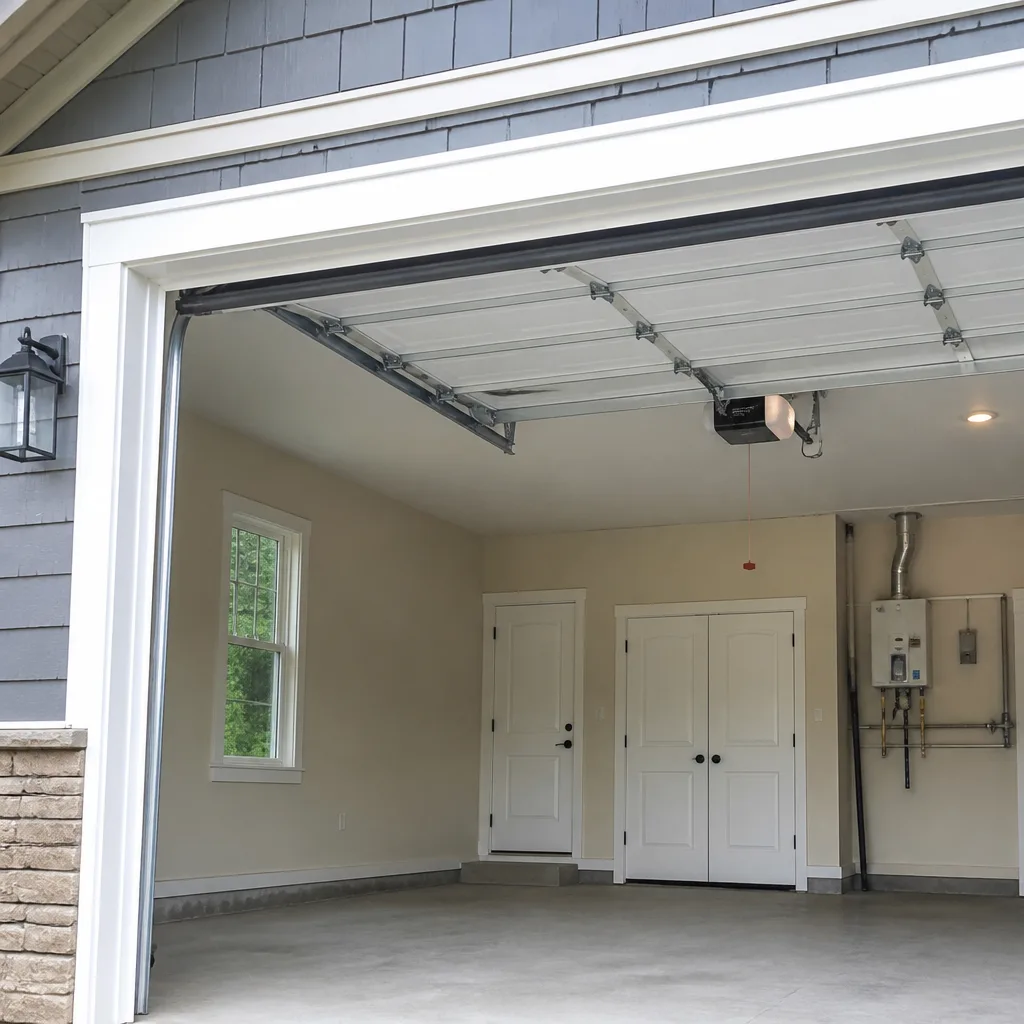
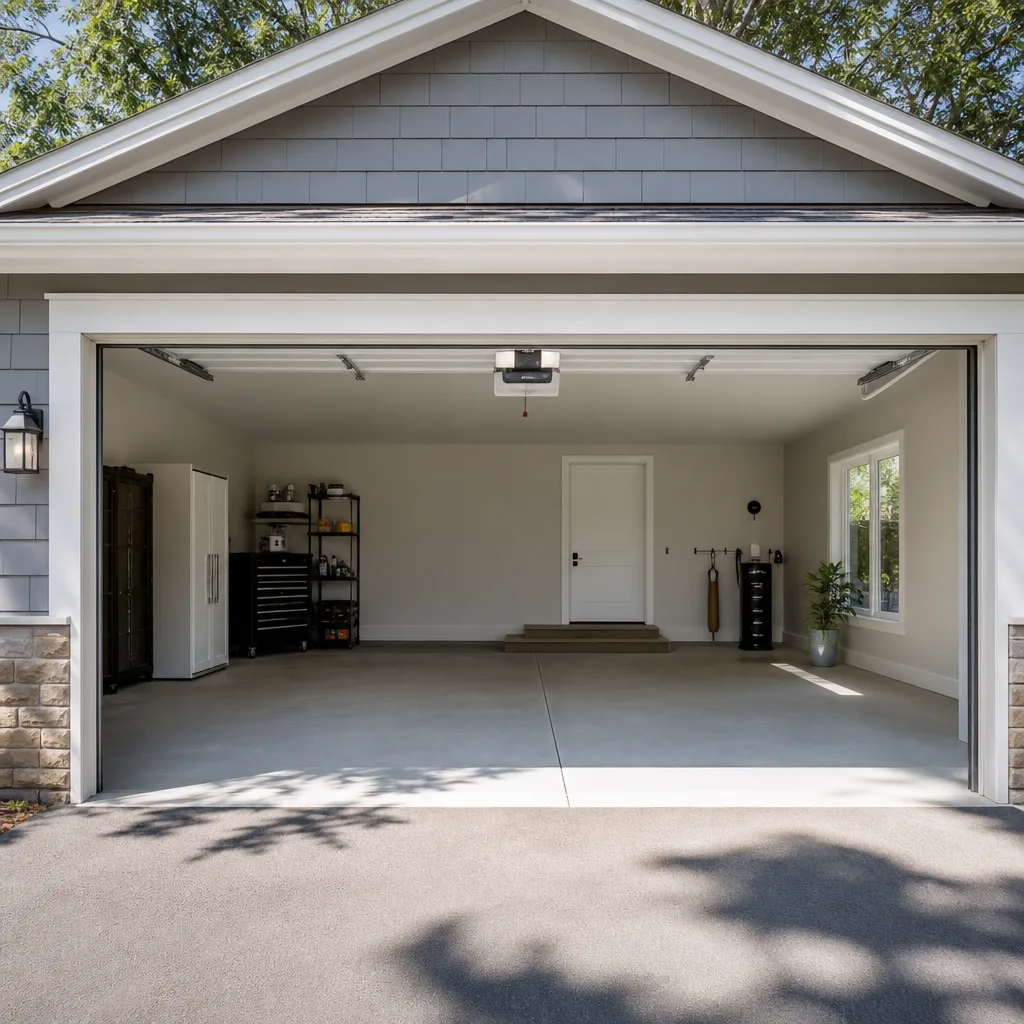
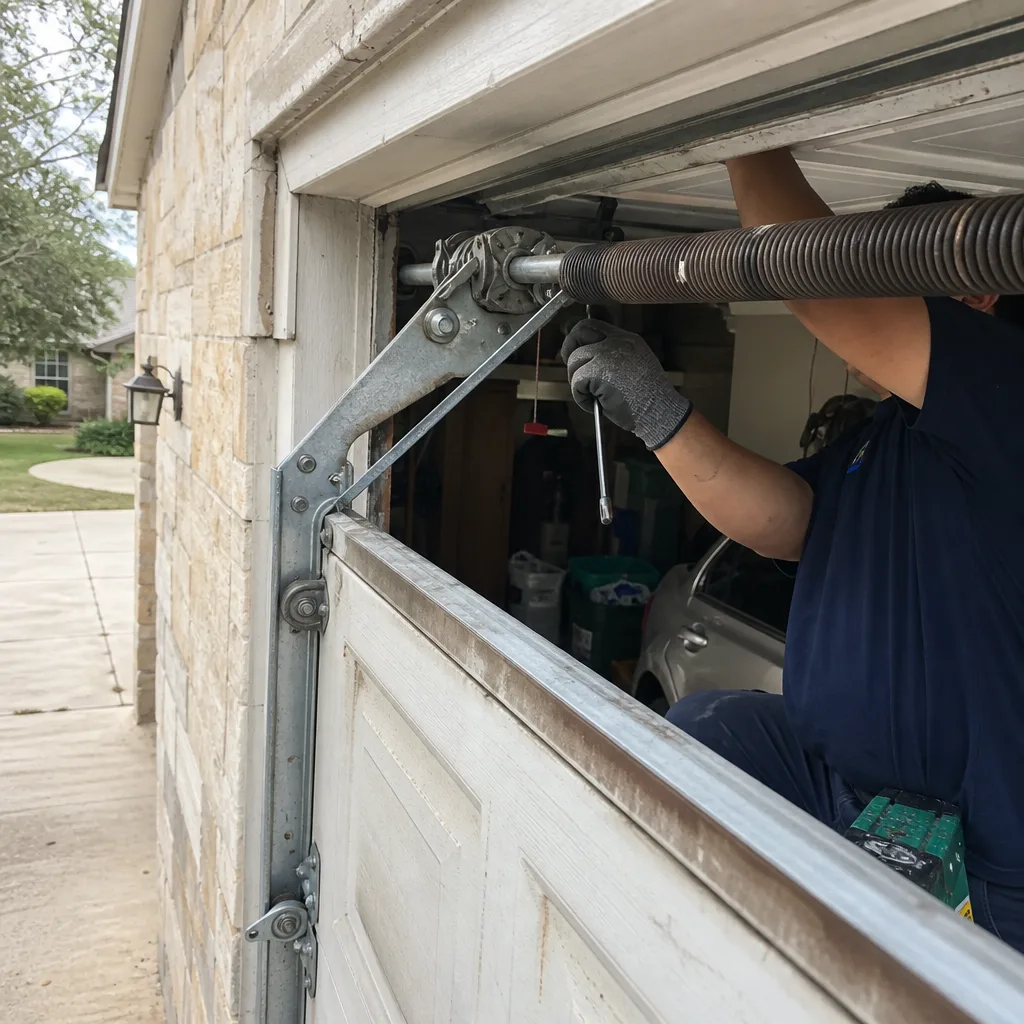 Before
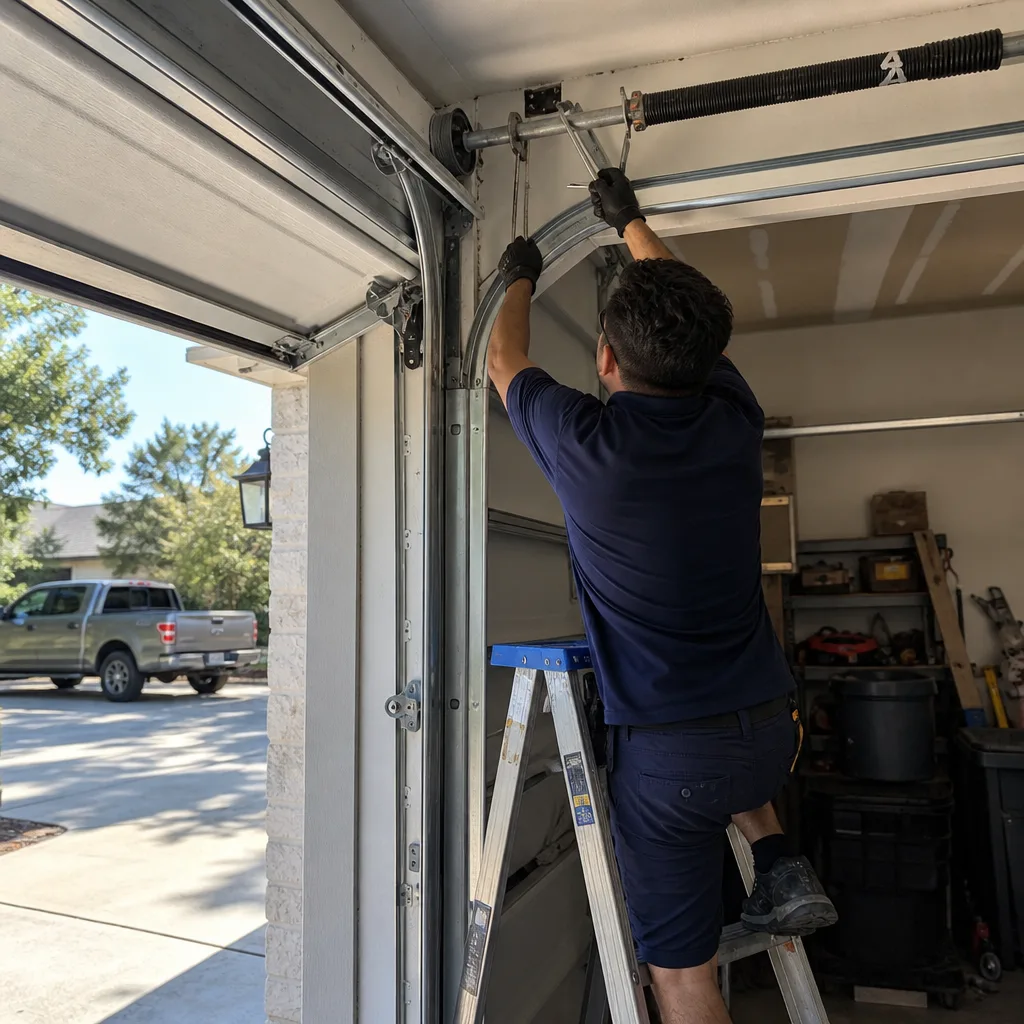 After
After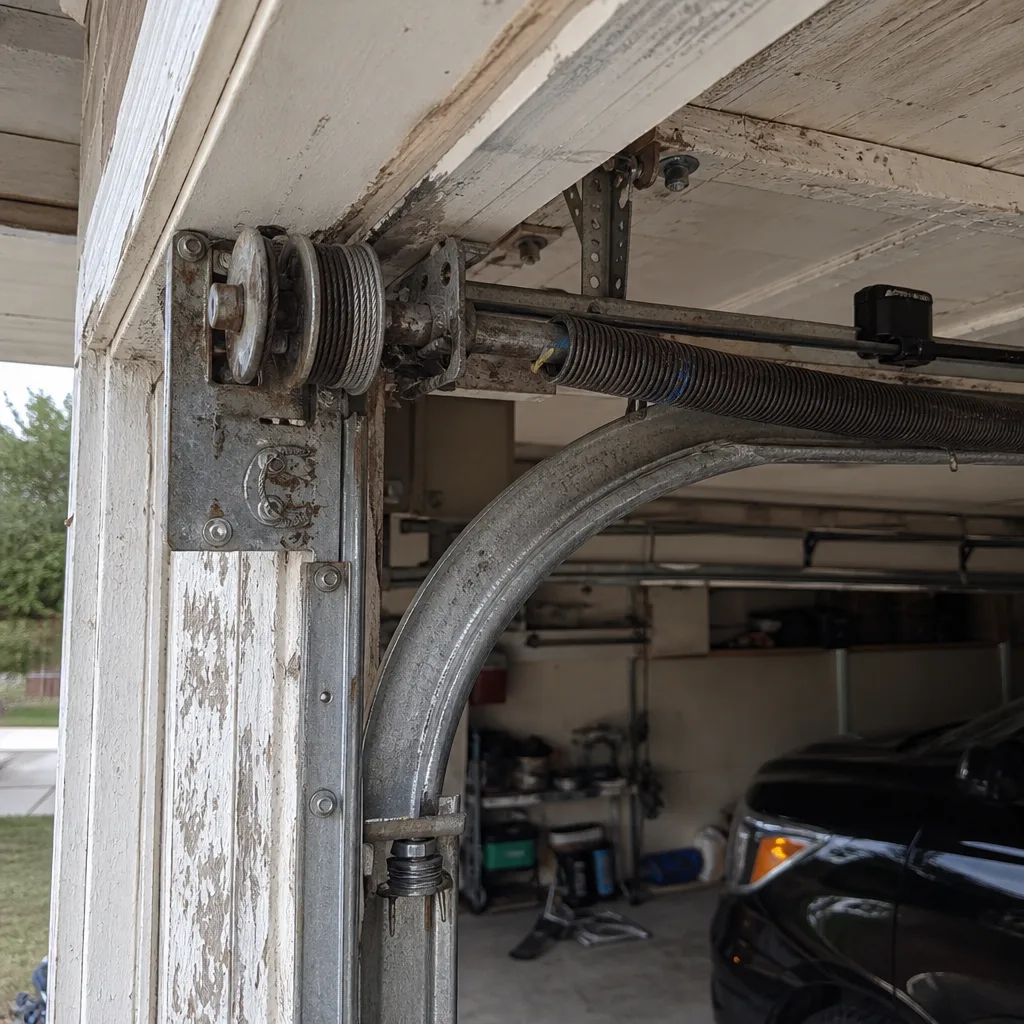 Before
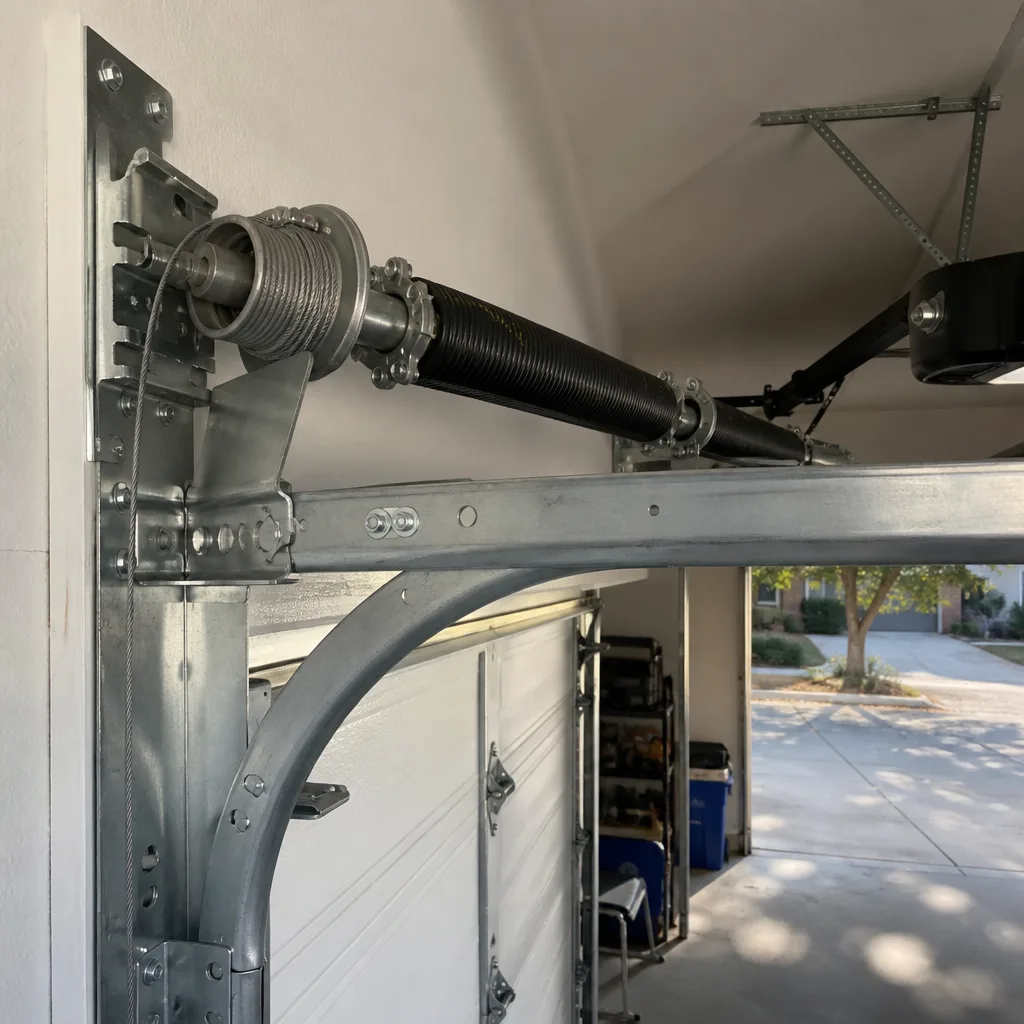 After
After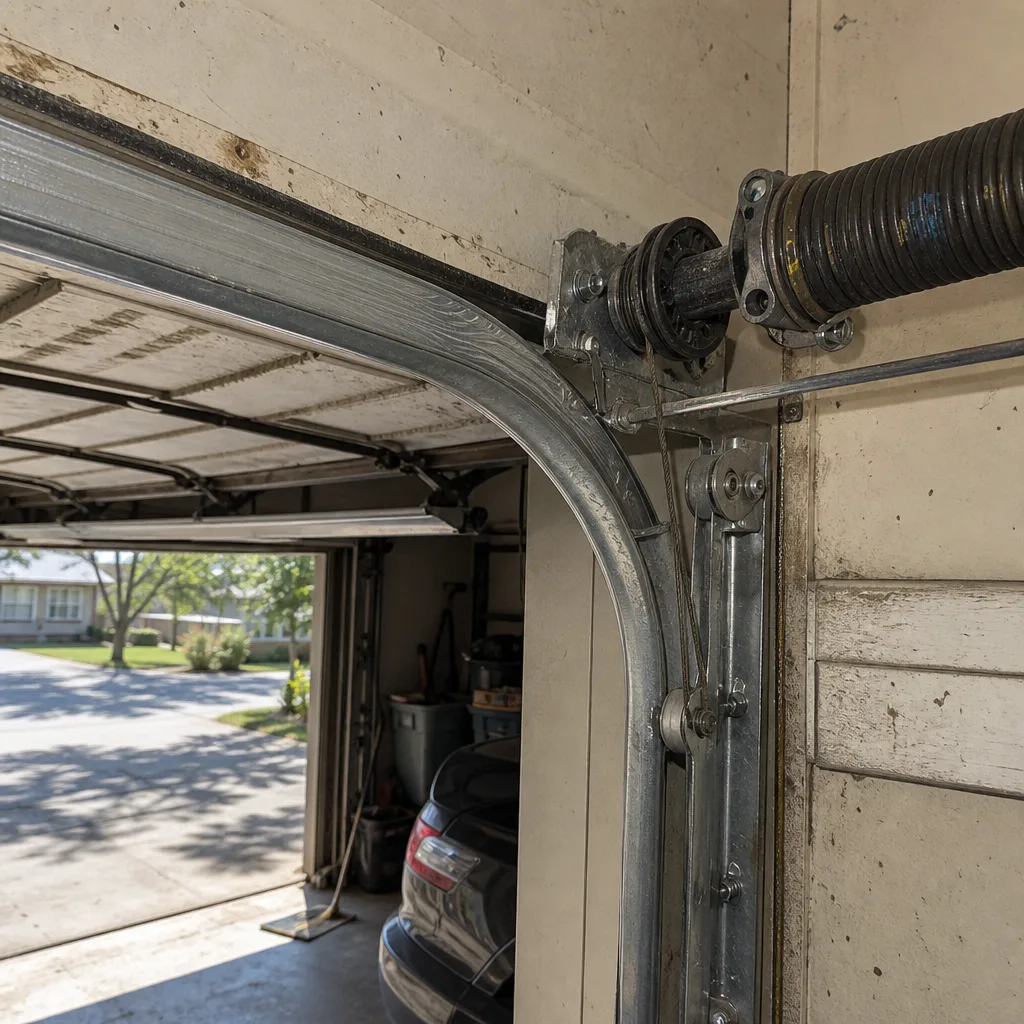 Before
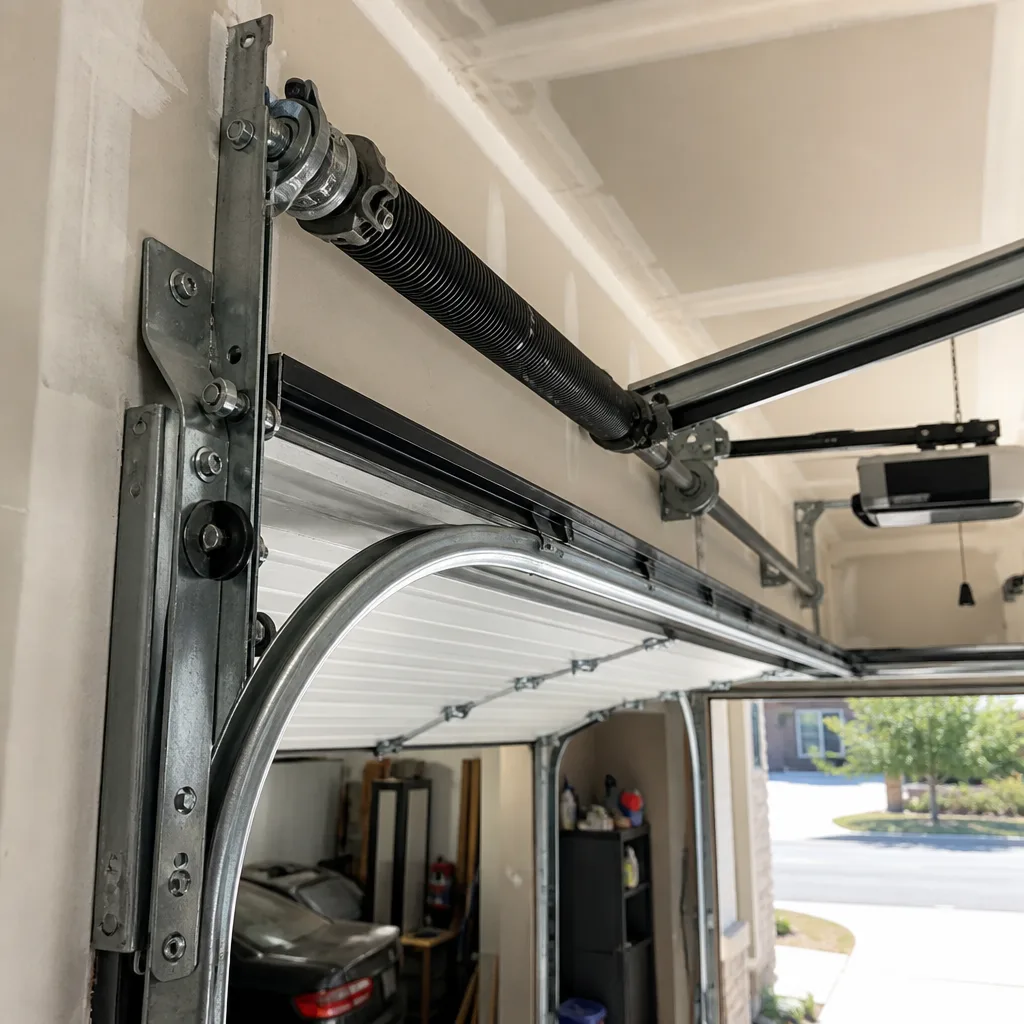 After
AfterGarage Door Repair Maintenance Checklist for Boerne Homeowners
Most checklist articles tell you to lubricate your springs. Almost none mention that spraying WD-40 on a torsion spring is one of the fastest ways to accelerate metal fatigue, turning a $200 service call into a $600 replacement in under two years. In Boerne, where summer garage temperatures regularly climb past 110 degrees and winter cold snaps send humidity plunging, the wrong maintenance product or skipped inspection costs more than it saves. This guide gives you pass-fail thresholds for every task, so you’ll know when something is done versus when it has surfaced a problem that needs Garage Door Repair from a trained hand.
Quick Answer
Boerne homeowners should inspect their garage door system twice yearly, in late April and late October, checking balance, hardware torque, seal integrity, and lubrication condition. A properly maintained residential garage door in the Hill Country should lift manually with roughly 10 pounds of force, show no gap larger than a quarter-inch at the floor seal, and operate without grinding or binding at any point in the travel. Tasks involving torsion springs, cable tension, or opener force-limit adjustments should be left to a professional, as these components store lethal energy and can cause serious injury. For related reading, see our guide on Garage Door Warning Signs: A Boerne Homeowner’s Reference Guide.
Table of Contents
- Why Boerne’s Climate Changes Your Maintenance Schedule
- Tools and Supplies You’ll Actually Need
- The Balance Test: How to Perform It and Read the Results
- Hardware Inspection: Torque, Wear, and Pass-Fail Thresholds
- Lubrication Guide: What Goes Where, and What Destroys Components
- Seal and Weatherstripping: Gap Tolerance and Replacement Timing
- Opener Safety Systems: Testing Force Limits and Photo Eyes
- Seasonal Maintenance Calendar for Boerne Homes
- Warranty Documentation: What to Record and When
- Common Mistakes to Avoid
- When to Call a Professional
- Frequently Asked Questions
- The Bottom Line
Why Boerne’s Climate Changes Your Maintenance Schedule
Boerne sits at roughly 1,400 feet in the Texas Hill Country, which means wider temperature swings than San Antonio proper and more limestone dust infiltration than coastal markets. We’ve found that garage doors in Timberwood Park, Cordillera Ranch, and the older homes near downtown Boerne fail on different schedules than the generic national guidance suggests.
The local pattern breaks into two distinct stress periods. Pre-summer, from late April through early May, is when you want to catch winter-hardened seals before they crack in the first sustained heat. Pre-winter, late October into November, is when you verify that summer-expanded metal components haven’t loosened to the point of rattling free in January’s cold snaps.
Here is what Boerne’s specific conditions do to garage door systems:
- Limestone dust: The crushed-stone driveways common in Kendall County produce fine particulate that infiltrates roller bearings and hinge pins. We see accelerated wear in homes within a quarter-mile of active construction or unpaved ranch roads.
- UV exposure: South- and west-facing garage doors in Boerne receive intense afternoon sun. Vinyl and rubber seals degrade faster here than in shaded or north-facing installations. A seal that lasts five years in Ohio typically shows cracking in three here.
- Humidity swings: Summer humidity can spike to 80 percent, then drop below 30 percent in a dry February. Metal components expand and contract through this range, loosening fasteners over time.
- Hail risk: March through May brings severe weather. Dented panels from pea-to-golf-ball hail stress the door’s structural integrity and can bind the track system if not addressed.
The national advice of “check your door once a year” is inadequate for this market. We recommend the twice-yearly schedule below, timed to beat the two damage windows rather than react to them.
Tools and Supplies You’ll Actually Need
We’ve watched homeowners buy entire tool collections for maintenance tasks that require four items. Here is the complete list, with the specific products that hold up in Hill Country conditions.
Tools:
- 7/16-inch and 1/2-inch socket wrenches or adjustable wrenches - these cover 90 percent of residential hardware
- Flashlight or headlamp for examining track interiors and spring condition
- Bathroom scale or fish scale for the balance test
- Clean cotton rags for wiping old grease and dust accumulation
Supplies:
- Torsion springs and rollers: Lithium-based garage door grease, white lithium grease in a squeeze tube, or a dedicated garage door lubricant such as Clopay Pro Lube or Genie Screw Drive Lube. Avoid aerosol chainsaw lubricants, which attract dust.
- Hinges and lock mechanisms: Same lithium grease, applied sparingly.
- Weatherstripping conditioner: Silicone-based spray for rubber and vinyl seals. Do not use petroleum-based products, which degrade rubber compounds.
What to leave on the shelf: WD-40 on any load-bearing component, 3-in-1 oil on rollers, and any lubricant labeled “penetrating” rather than “protective.” Penetrating oils thin out under heat and leave metal unprotected. In a Boerne garage in August, that means re-lubrication in six weeks and component damage in eighteen months.
The Balance Test: How to Perform It and Read the Results
The balance test tells you whether your springs are doing their job. A door that is out of balance overworks the opener, strains cables, and creates uneven wear on rollers and hinges. This is the single most informative test a homeowner can perform, and most guides describe the procedure without explaining what the results mean.
How to perform the test:
- Close the door fully and disconnect the opener by pulling the red emergency release cord. The door must be free to move manually.
- Lift the door slowly by the handle until it is about waist-high, roughly three to four feet off the ground.
- Release the door smoothly and step back.
Reading the result:
- Stays put: The door remains within six inches of where you released it. This is a pass. Your springs are correctly tensioned.
- Drifts up: The door rises toward the open position. This indicates excessive spring tension. The opener is fighting the springs on every close cycle, and the door may not stay down if the opener fails. Schedule professional adjustment.
- Drifts down slowly: The door descends at a controlled rate, reaching the floor in more than five seconds. This indicates weak spring tension. The opener is doing the spring’s work, which burns out the motor prematurely and creates a safety hazard if the opener’s force limit fails.
- Drops fast: The door falls rapidly, hitting the floor with force. This is a fail and a safety hazard. A cable or spring could be near failure. Do not operate the door. Call for service.
In Boerne, we see slow-drift results most often on doors facing southwest, where summer heat accelerates spring fatigue. Fast-drop results cluster on doors with original springs past the 12-year mark, common in the 1990s and early-2000s builds in Boerne Stage Road and Balcones Creek areas.
The force measurement: if you have a scale, a balanced door should require roughly 10 pounds of lifting force at the handle. More than 20 pounds means the springs are weak. Less than 5 pounds means they are over-tensioned. Both conditions warrant professional attention.
Hardware Inspection: Torque, Wear, and Pass-Fail Thresholds
Every moving joint in a garage door system loosens with cycle vibration. A typical Boerne household opens and closes their door 1,500 to 2,000 times per year. That vibration travels through hinges, roller brackets, track supports, and opener mounting hardware.
Roller and hinge inspection:
- Steel rollers: Check for flat spots, bent shafts, or wobble in the track. A roller that clatters or binds has failed. Pass-fail: any visible bearing wear or shaft deformation is replacement time.
- Nylon rollers: These run quieter but wear differently. Look for cracked or chipped wheels, or a wheel that no longer spins freely by hand. Pass-fail: cracked wheel or seized bearing means replace.
- Hinges: Grasp each hinge and attempt to wiggle it. Any movement between the hinge leaf and the door panel indicates a loose bolt or elongated hole. Pass-fail: visible gap or movement beyond 1/16 inch needs tightening or replacement.
Track and hardware torque:
- Wall-mounted track brackets: Verify bolts are tight to the jamb. Do not over-torque; snug plus a quarter-turn is sufficient. Overtightening strips lag bolts in wood framing.
- Vertical-to-horizontal track curve: Shine a flashlight into the curve section. Look for metal shavings or black grease streaks, which indicate roller impact from misalignment.
- Cable drums and end bearings: Visually inspect for fraying, rust, or cable overlap on the drum. Pass-fail: any fraying is immediate replacement. Cable work involves stored energy and belongs to a professional.
Spring condition:
Look at your torsion spring across the top of the door. A healthy spring shows tight, even coils with no visible gap between them when the door is closed. A 1/4-inch or greater gap between coils indicates a failing spring. Rust powder, orange dust, or a visible crack means the spring is living on borrowed time. Do not attempt to adjust or replace a torsion spring. The torque stored in a standard residential spring can cause serious injury or death if released improperly.
Lubrication Guide: What Goes Where, and What Destroys Components
This is where most maintenance guides cost homeowners money instead of saving it. The wrong product in the wrong place attracts dust, hardens in heat, or degrades rubber and plastic components.
Torsion spring:
Apply white lithium grease lightly across the coil length. The goal is a thin film, not saturation. Wipe excess with a rag. In Boerne’s summer heat, heavy grease application migrates downward and collects dust, creating an abrasive paste. We see this most often on doors in Fair Oaks Ranch and Cordillera Ranch, where homeowners follow generic “generous application” advice.
Rollers:
Steel rollers with exposed bearings: small drop of lithium grease on each bearing, spin the roller to distribute. Nylon rollers: lubricate the shaft where it meets the hinge, not the wheel itself. Grease on nylon attracts dust and creates a grinding compound.
Hinges:
One drop at each pivot point. Operate the door once to distribute. Wipe any drips before they attract dust.
Lock and handle:
Graphite powder or dry Teflon lubricant for the keyway and bolt mechanism. Oil-based products gum up in temperature swings.
Track:
Do not lubricate the track. The rollers are designed to roll, not slide. Oiled tracks collect dust and cause roller slippage. Clean the track interior with a dry rag only.
Opener rail:
Chain-drive openers: manufacturer-specified chain lubricant, not standard grease. Belt-drive: typically no lubrication needed. Screw-drive: specific screw drive lubricant per manufacturer. Using the wrong product voids warranty coverage on LiftMaster, Chamberlain, and Craftsman units.
What to avoid in high-heat environments:
- WD-40 on any component - it is a water displacer, not a lubricant, and evaporates in weeks
- Penetrating oils on springs or hinges - they thin under heat and leave metal dry
- Petroleum-based products on rubber or vinyl seals - they cause hardening and cracking
- Silicone spray on walking surfaces near the door - creates a slip hazard
Seal and Weatherstripping: Gap Tolerance and Replacement Timing
The bottom seal and side weatherstripping do more than keep out weather. They prevent rodent entry, reduce energy loss, and protect the door bottom from rot on wood-frame installations. In Boerne, where scorpions and field mice are active year-round, a compromised seal is an open invitation.
Bottom seal inspection:
Close the door on a sunny day and look for daylight from inside. Any visible light indicates a gap. For measurement, slide a quarter under the seal at multiple points. The seal should grip the quarter with slight resistance. If the quarter slides through freely, the seal has compressed beyond function.
Pass-fail thresholds:
- Up to 1/8-inch gap: Acceptable on uneven concrete, but monitor for expansion.
- 1/8-inch to 1/4-inch gap: Seal replacement recommended. Pests and water intrusion risk begins here.
- Over 1/4-inch gap: Immediate replacement. At this width, the door may also be out of plumb or the concrete may have settled, requiring track adjustment or concrete leveling in addition to seal replacement.
Side and top weatherstripping:
Press the vinyl or rubber against the door face. It should rebound to contact within two seconds. Cracking, permanent compression set, or detachment from the retainer means replacement. In south-facing Boerne garages, UV degradation typically appears first on the top seal, which receives the most direct sun.
Retainer condition:
The aluminum or plastic channel that holds the seal can corrode or crack. Check for greenish oxidation on aluminum retainers, common in homes with sprinkler overspray. A failed retainer cannot grip a new seal properly and must be replaced with the seal.
Opener Safety Systems: Testing Force Limits and Photo Eyes
Federal law since 1993 requires automatic reversal on contact and non-contact photo eye protection. These systems save lives, but only if they function correctly. Testing takes under five minutes and should be performed monthly.
Photo eye test:
- Close the door using the remote or wall button.
- As the door descends, wave a broomstick through the beam path, roughly six inches above the floor.
- The door must reverse immediately. If it continues downward, the photo eyes are misaligned, dirty, or failed.
Clean the lenses with a soft, dry cloth. Check alignment by verifying both housings show a steady indicator light, typically green. In Boerne, spider webs across the lens and dust from limestone roads are the most common causes of false obstruction signals.
Contact reversal test:
- Place a 2×4 board flat on the floor, centered under the door path.
- Close the door using the remote.
- The door must reverse within two seconds of contact with the board.
If the door stops on the board without reversing, or if it attempts to crush the board, the force limit is set too high. This adjustment is inside the opener housing and should be made by a technician. Incorrect force-limit settings are a leading cause of injury and a common factor in liability claims.
Wall button and remote:
Verify the wall button’s lock function is not engaged, which disables remotes. Test each remote from outside the garage at normal operating distance. Weak or intermittent response often indicates battery decline or interference from LED bulbs in the opener housing, a known issue with some Craftsman and Chamberlain models.
Seasonal Maintenance Calendar for Boerne Homes
The generic “spring and fall” advice ignores that Boerne’s two critical windows have different priorities. Here is the schedule we follow for our own maintenance customers in Kendall County.
Late April to early May (Pre-Summer):
- Inspect and condition bottom seal - catch winter-hardened rubber before summer heat causes cracking
- Verify opener force limits - heat-expanded metal components change resistance
- Clean photo eye lenses - pollen and dust season peaks in April
- Lubricate springs and hinges - before the three-month stretch of 100-degree garage temperatures
- Check for hail damage from March storms - dents stress panels and track alignment
Late October to early November (Pre-Winter):
- Re-torque all hardware - summer expansion and contraction loosens fasteners
- Perform balance test - spring fatigue often shows first as cold weather increases steel brittleness
- Inspect cable condition - temperature swings accelerate corrosion at drum contact points
- Verify weatherstripping rebound - compressed seals stiffen in cold and may not recover
- Test backup battery on opener - power outages spike in winter storm season
Homes in higher-elevation areas such as Cordillera Ranch or near Cascade Caverns experience slightly earlier temperature drops. Shift the pre-winter window one week earlier if your home sits above 1,800 feet.
Warranty Documentation: What to Record and When
Manufacturer warranties on doors, openers, and components often require proof of maintenance to remain valid. A denied warranty claim on a $400 opener because of missing records is an expensive lesson.
What voids warranties if done incorrectly:
- Spring adjustment or replacement: Clopay, Amarr, and Wayne Dalton all specify that torsion spring work must be performed by a qualified technician. DIY spring work voids the door’s structural warranty and the spring’s separate warranty.
- Opener force-limit adjustment: LiftMaster and Chamberlain require authorized service for force-limit changes on most models after 2018. The adjustment potentiometer is often sealed or software-protected.
- Non-specified lubricants: Using WD-40 or non-approved products on Genie screw-drive openers voids the drive mechanism warranty. The manufacturer specifies Genie-branded or equivalent screw drive lubricant.
- Panel replacement with non-OEM parts: Replacing a dented panel with a third-party equivalent, rather than the manufacturer’s specified replacement, voids the door’s wind-load and structural warranty.
What to document:
- Date of each maintenance session
- Products used, with brand and specification
- Photographs of component condition, especially springs, cables, and seals
- Professional service invoices with technician name and company
- Serial numbers of door, opener, and any replaced components
Store records digitally with cloud backup. Paper records in a Boerne garage deteriorate in humidity. We provide detailed invoices with all of this information on every Garage Door Repair in Boerne service, specifically to support warranty standing for our customers.
Common Mistakes to Avoid
- Spraying WD-40 on torsion springs. It is not a lubricant. It displaces water briefly, then evaporates and leaves a sticky residue that attracts limestone dust. Within a year, the spring is grinding itself apart.
- Ignoring a slow-drift balance test. Homeowners often notice the door feels heavier but assume the opener is just aging. The opener is compensating for spring fatigue, and the motor is burning out prematurely. A $200 spring adjustment becomes a $650 opener replacement.
- Overtightening track bolts. Snug is sufficient. Overtorqued lag bolts strip out of wood jambs, especially in older Boerne homes with cedar or pine framing common in 1980s construction.
- Lubricating the track. Rollers are designed to roll. Oiled tracks cause slippage, binding, and accelerated roller wear. Clean tracks with a dry rag only.
- Skipping the photo eye alignment check. Misaligned photo eyes are the most common cause of “my door won’t close” calls in Boerne. A two-minute alignment saves a service call.
- Using the wrong seal for the application. T-style, bead-style, and bulb-style seals are not interchangeable. The wrong profile leaves gaps or binds in the retainer. Match the existing seal profile exactly.
- Performing maintenance with the opener plugged in. Always disconnect power at the outlet before working on the door or opener. Accidental remote activation during hinge work causes hand and finger injuries every year.
When to Call a Professional
Some maintenance surfaces problems; other problems should never be approached as maintenance. Call a technician if you find any of the following: a torsion spring with coil separation or rust dust, a frayed or unseated cable, a door that fails the balance test with fast-drop or hard-lift results, an opener that fails the contact reversal test, or track damage from vehicle impact or hail. These conditions involve stored energy, structural load, or safety system failure that requires training and proper tools.
Mainspring Garage Door Co. offers free estimates in Boerne. Our trucks carry springs, cables, rollers, and openers for all major brands, so most jobs are completed in a single visit. We state the flat price before any work begins, and every job is covered by our 90-Day Done Right Promise in writing. If your inspection has surfaced a problem beyond your comfort, call us at (830) 365-0775.
Frequently Asked Questions
Twice yearly, in late April and late October, matching Boerne’s two-phase climate stress pattern. A monthly photo eye and reversal test adds five minutes and catches safety system failures early. Call (830) 365-0775 to schedule our $89 Seasonal Tune-Up if you prefer professional handling.
Our seasonal tune-up is $89 and includes balance testing, hardware torque verification, lubrication with specified products, safety system testing, and a written condition report. Repairs found during maintenance are quoted upfront before any additional work begins. Seniors and veterans receive a permanent 5% discount.
No. Torsion springs store lethal energy sufficient to cause serious injury or death if released improperly. The adjustment requires winding bars, proper anchoring, and training. Additionally, DIY spring work voids manufacturer warranties on Clopay, Amarr, Wayne Dalton, and most other major brands. This is a task for a trained technician only.
Cold temperatures increase grease viscosity and metal contraction. Hardened grease no longer cushions roller and hinge movement, and contracted components fit more loosely until the system warms. In Boerne’s occasional hard freezes, we see this complaint from homes in higher elevations such as Cordillera Ranch and near Boerne City Lake. A pre-winter lubrication with lithium grease formulated for low temperatures reduces this effect.
No. Mainspring states the flat price before any work begins. If our technician finds additional issues during a repair visit, we explain the finding, quote the additional work separately, and obtain your approval before proceeding. There are no surprises on the bill. This is our standard practice on every Garage Door Installation in Boerne and repair service.
Opener replacement is typically warranted when the unit is over 15 years old, the manufacturer no longer supports parts, or repair costs exceed 60 percent of replacement cost. For newer openers, a failed gear kit, logic board, or safety sensor is usually repairable. During any service call, we assess both options and quote each so you can decide. We are factory-familiar with LiftMaster, Chamberlain, Craftsman, Raynor, and all major brands. Visit our Garage Door Opener in Boerne page for more on opener options.
The Bottom Line
A useful maintenance checklist gives you measurements, not just tasks. Know that a balanced door stays within six inches of release, that a quarter-inch floor gap means seal replacement, that lithium grease belongs on springs and WD-40 never does. Perform the full inspection twice yearly, test safety systems monthly, and document everything for warranty protection. Browse our more guides & resources for additional homeowner maintenance tips. When a test fails, the threshold has told you that maintenance has ended and professional service has begun. That distinction, applied consistently, is what keeps a garage door reliable for decades in Boerne’s demanding climate.
If your inspection has surfaced a concern, or if you would rather have a technician perform the complete checklist, call Mainspring Garage Door Co. at (830) 365-0775. We answer live, 24 hours a day, and we arrive with the parts to finish most jobs in one visit. The price is stated upfront. The work is backed in writing for 90 days. That is a square deal, and it is how we have operated since 1984.
Written by Carl Dutton, Owner at Mainspring Garage Door Co., serving Boerne since 2016.