
Last updated September 10, 2026
Full 25-point door and opener safety check with every visit - springs, cables, rollers, tracks, and your LiftMaster or Chamberlain opener included
You get a price before we start. It does not change when the truck arrives.
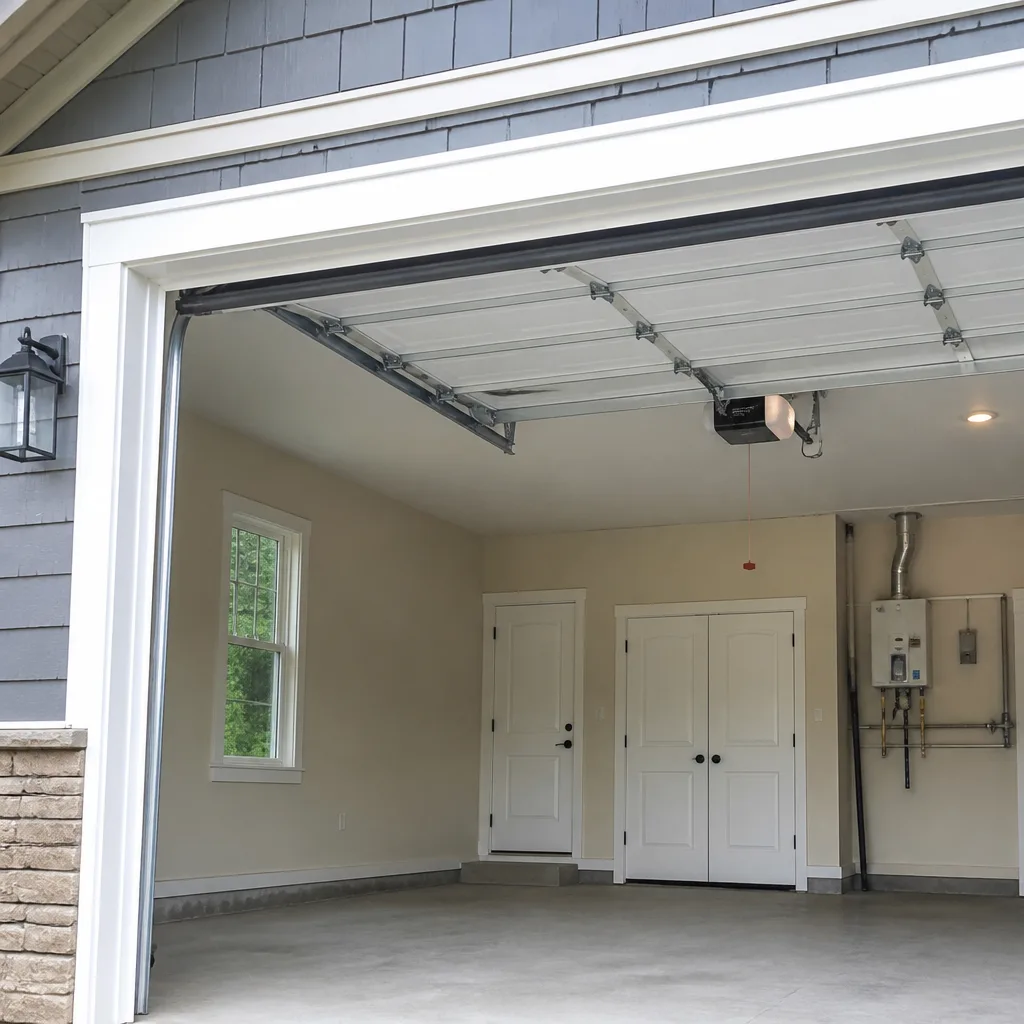
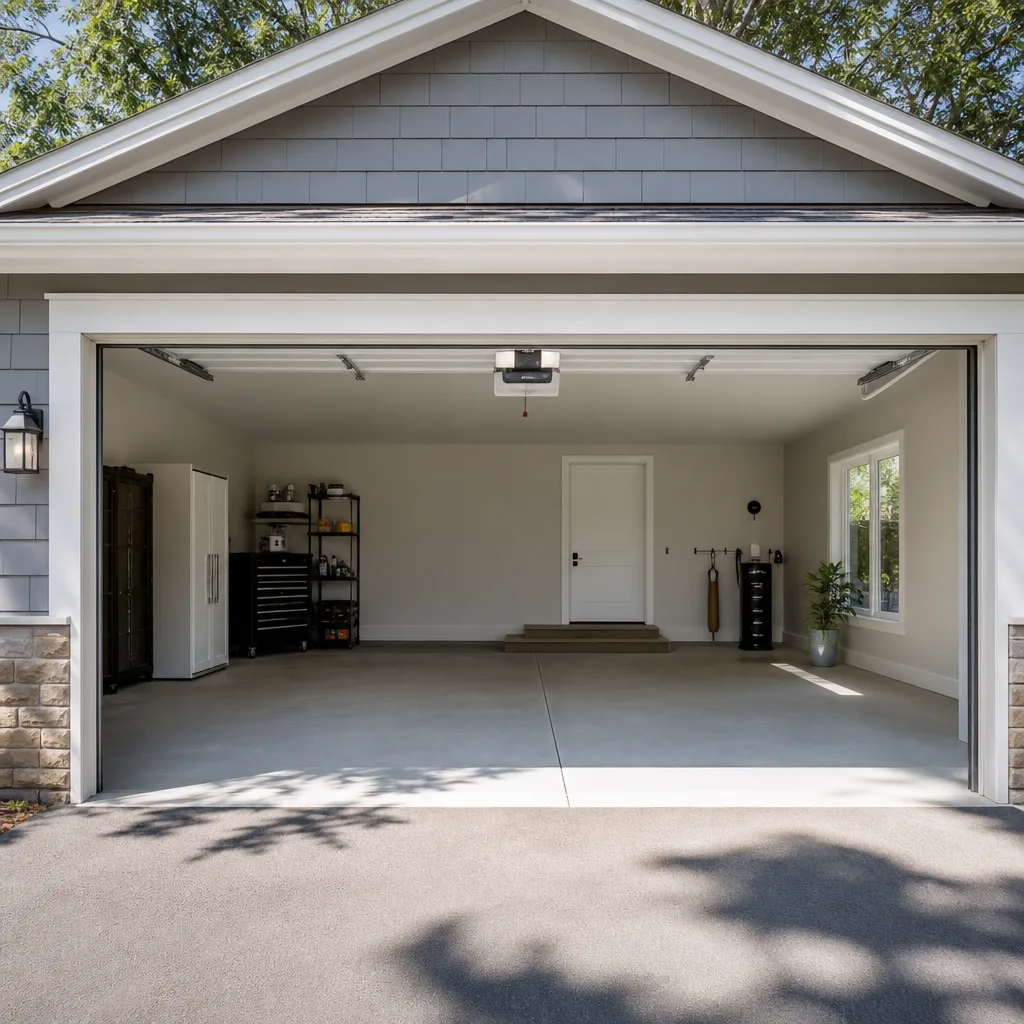
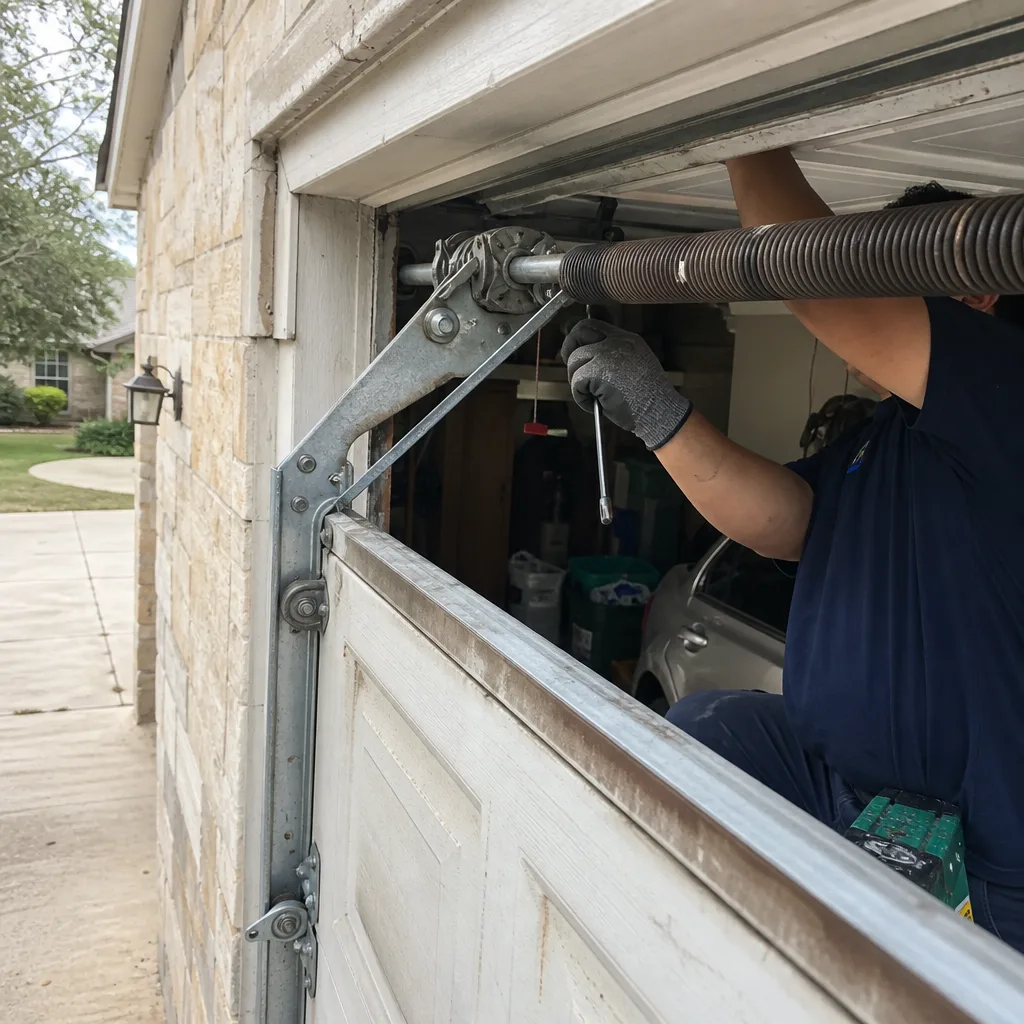 Before
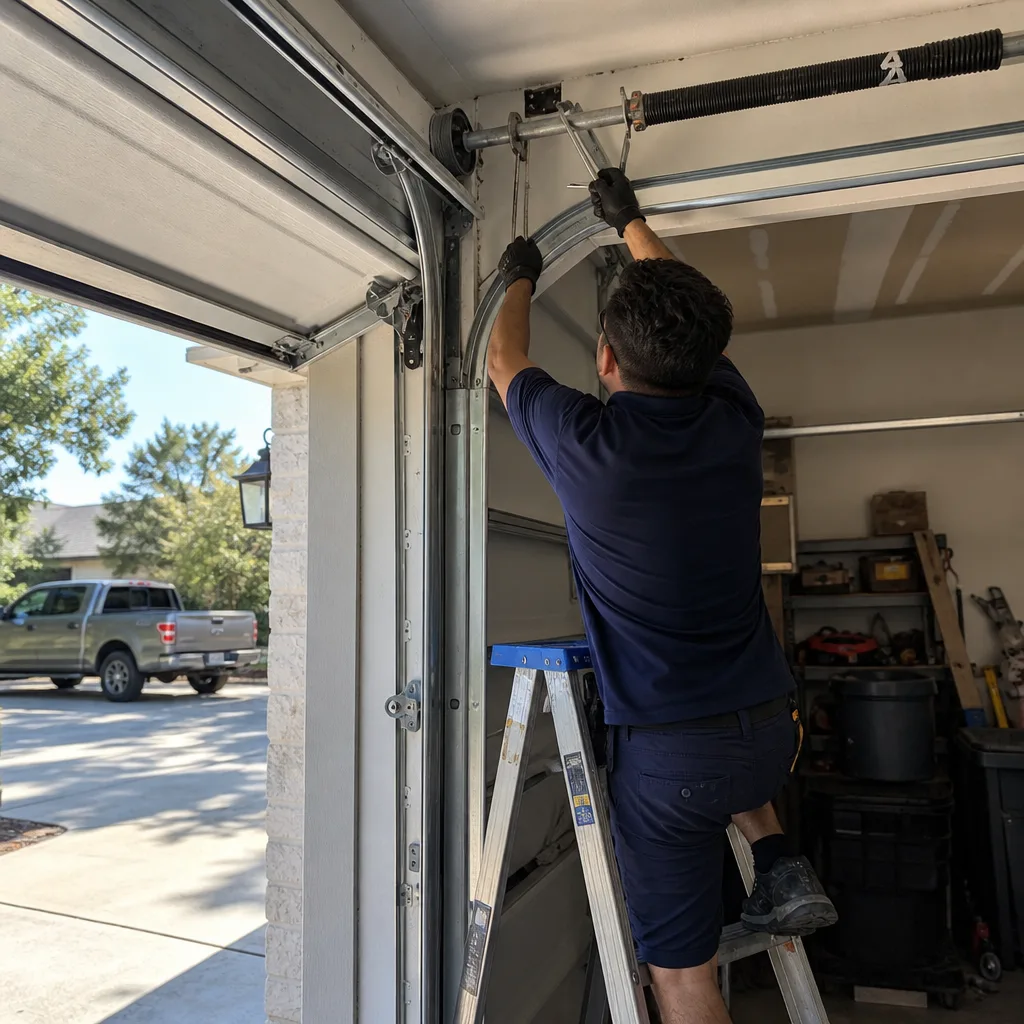 After
After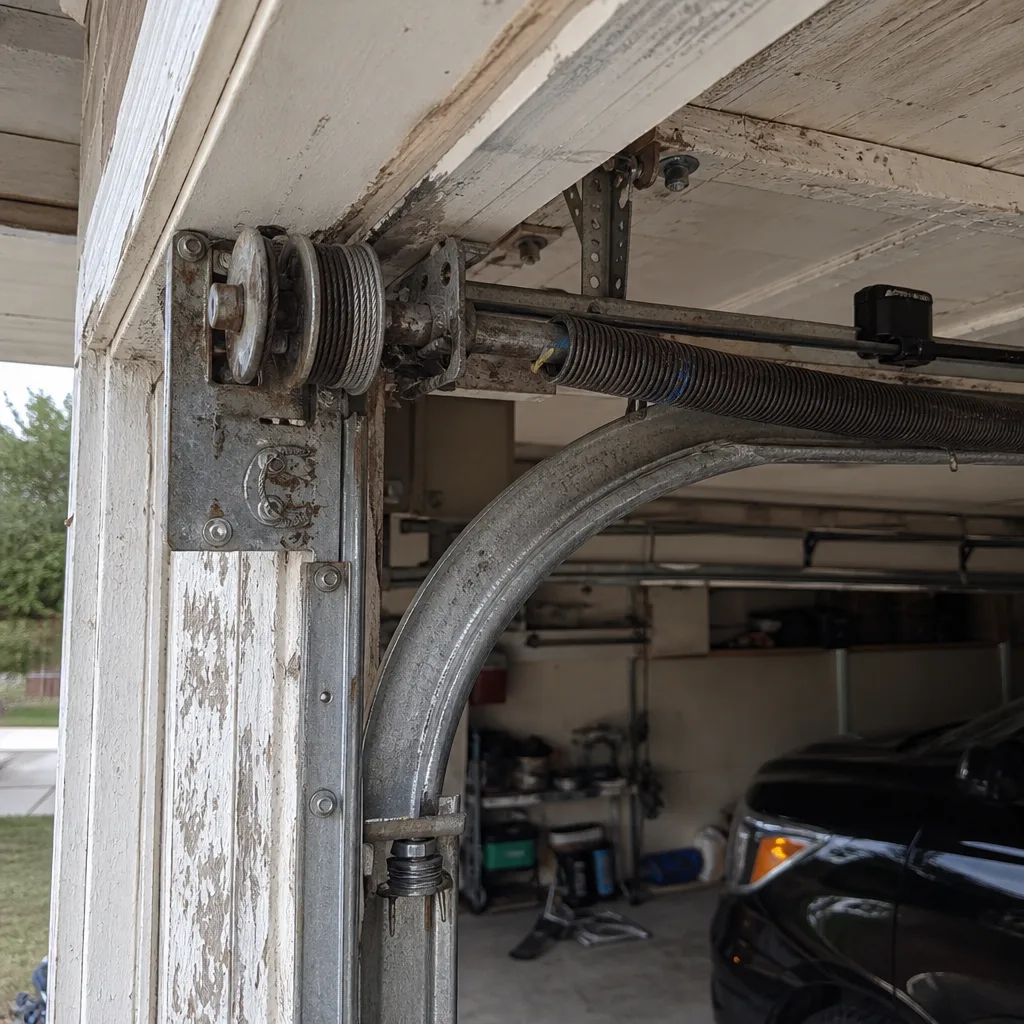 Before
 After
After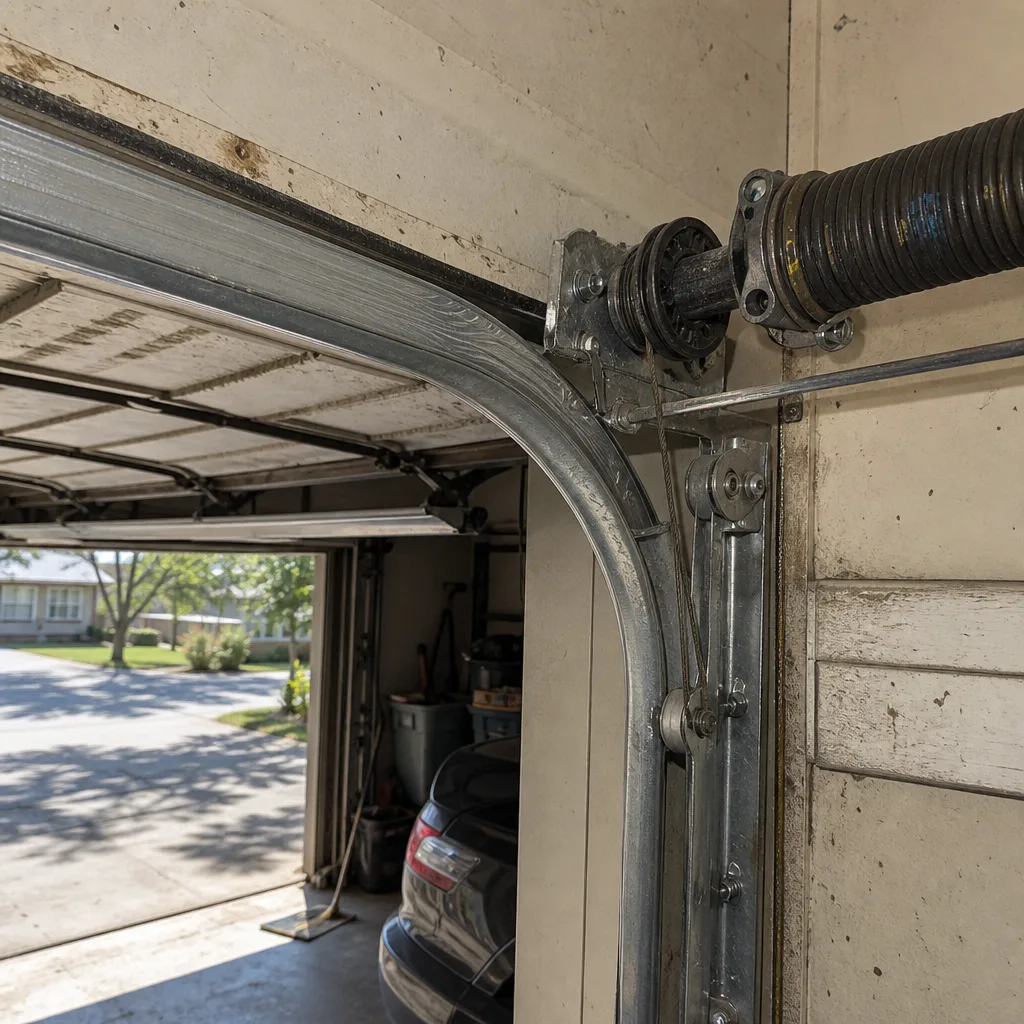 Before
 After
AfterDIY vs Professional Garage Door: The Boerne Homeowner’s Decision Guide
A torsion spring stores enough rotational energy to break a wrist or worse if it releases wrong. That is not a scare tactic. Every major spring manufacturer prints “professional installation only” directly on the packaging, and there is a reason. In Boerne, where limestone foundations shift with the seasons and garage doors take the abuse of Hill Country temperature swings, the question is not whether you are handy enough. It is whether the job you are considering carries injury or liability risk that no YouTube tutorial can transfer to the person holding the wrench. This guide breaks down which tasks belong in a homeowner’s Saturday morning and which belong to a trained technician with the right tools and insurance.
Quick Answer
Most Boerne homeowners can safely handle weatherstripping, sensor alignment, remote programming, and basic lubrication themselves. Any work involving torsion springs, extension springs, lift cables, or the header bracket mounting requires a professional due to serious injury risk and potential homeowner’s insurance complications. For new door installation or panel replacement, DIY typically costs more in tools and time than professional service once hidden expenses are counted.
Table of Contents
- What Homeowners Can Safely Do Themselves
- The Danger Zone: Springs, Cables, and Header Brackets
- The True Cost of DIY: Tools, Time, and Hidden Expenses
- Boerne Permits, Inspections, and Code Requirements
- Homeowner’s Insurance and Liability Exposure
- When DIY Is Actually the Right Call
- What Professional Service Actually Delivers
- A Simple Decision Framework
What Homeowners Can Safely Do Themselves
There is honest work a competent homeowner can handle without risk. We have seen plenty of Boerne residents keep their doors running smooth for years with nothing more than attention and basic maintenance. The key is knowing where the line sits between routine care and mechanical work under load.
Safe DIY Tasks
- Weatherstripping replacement. The rubber seal along the bottom and sides of the door simply slides into a retainer channel. No tension, no load. Buy the correct profile for your door brand, cut to length with a utility knife, and press into place. In Boerne, where cedar pollen and dust blow hard through spring, this is worth doing every two to three years.
- Photo-eye sensor alignment. Those two small boxes near the floor on either side of the track send an invisible beam across the opening. If the door reverses when it should close, or the opener light flashes, check that both sensors face each other squarely. Clean the lenses with a dry cloth, loosen the wing nuts, adjust until both indicator lights glow steady, then tighten. Test by waving a broom through the beam while the door closes.
- Remote and keypad programming. Every opener manufacturer uses a slightly different button sequence, but none involve mechanical force. For LiftMaster and Chamberlain units, press the learn button on the motor head, then press the remote button within 30 seconds. Genie systems use a similar sequence with their Intellicode buttons. Keep the manual or photograph the label inside the light cover for reference.
- Visual inspection and lubrication. Once per season, examine rollers, hinges, and track for wear or debris. Apply a silicone-based spray lubricant to the hinges, roller stems, and bearing plates. Never use WD-40 on garage door components, it attracts grit and turns to grinding paste in Boerne’s dusty air. Do not lubricate the track itself, the rollers need grip to roll, not slide.
- Garage door opener troubleshooting within limits. Check that the unit is plugged in, the breaker is on, and the disconnect cord has not been pulled. Beyond this, the internal gears and circuit boards belong to a technician.
These tasks share a common trait: they involve no stored mechanical energy. The door rests at rest, or the opener is unplugged. If your hands would not be injured by the door simply falling closed, the task is likely safe.
The Danger Zone: Springs, Cables, and Header Brackets
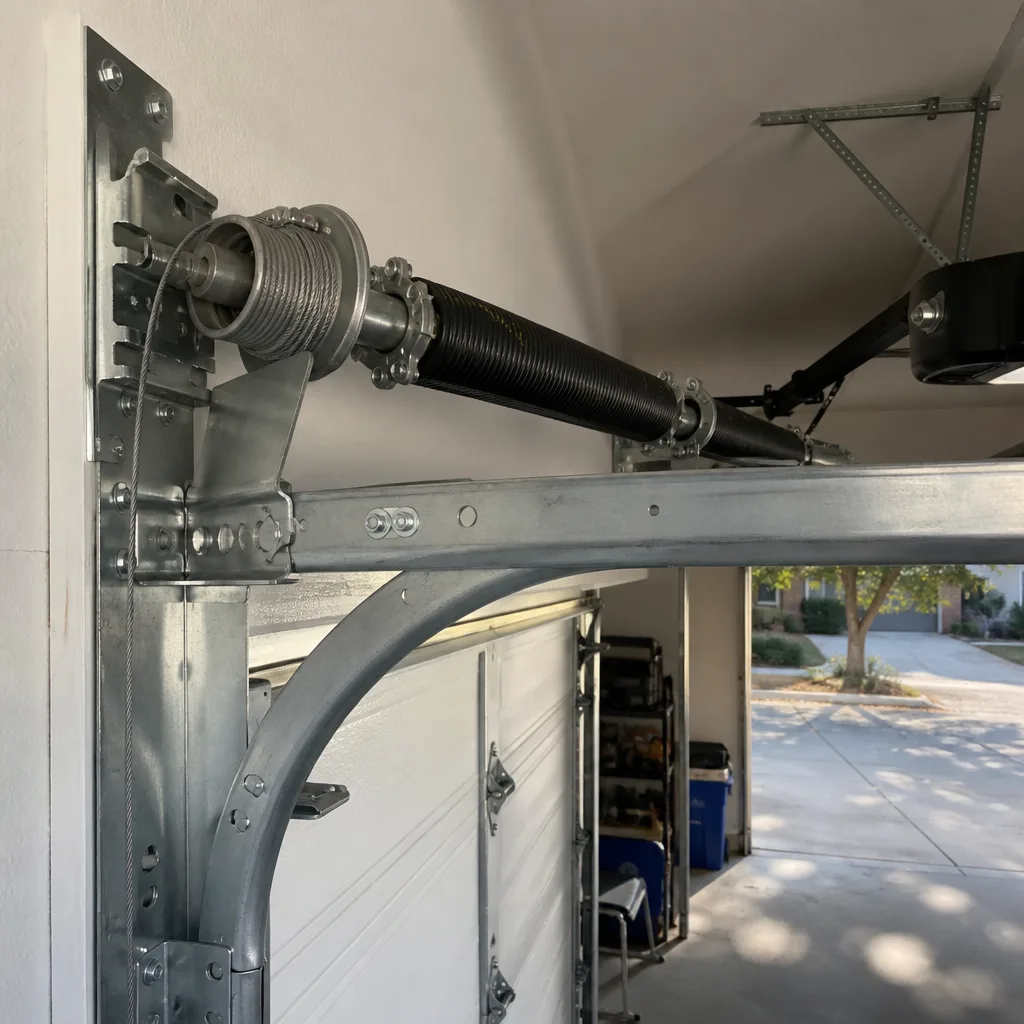
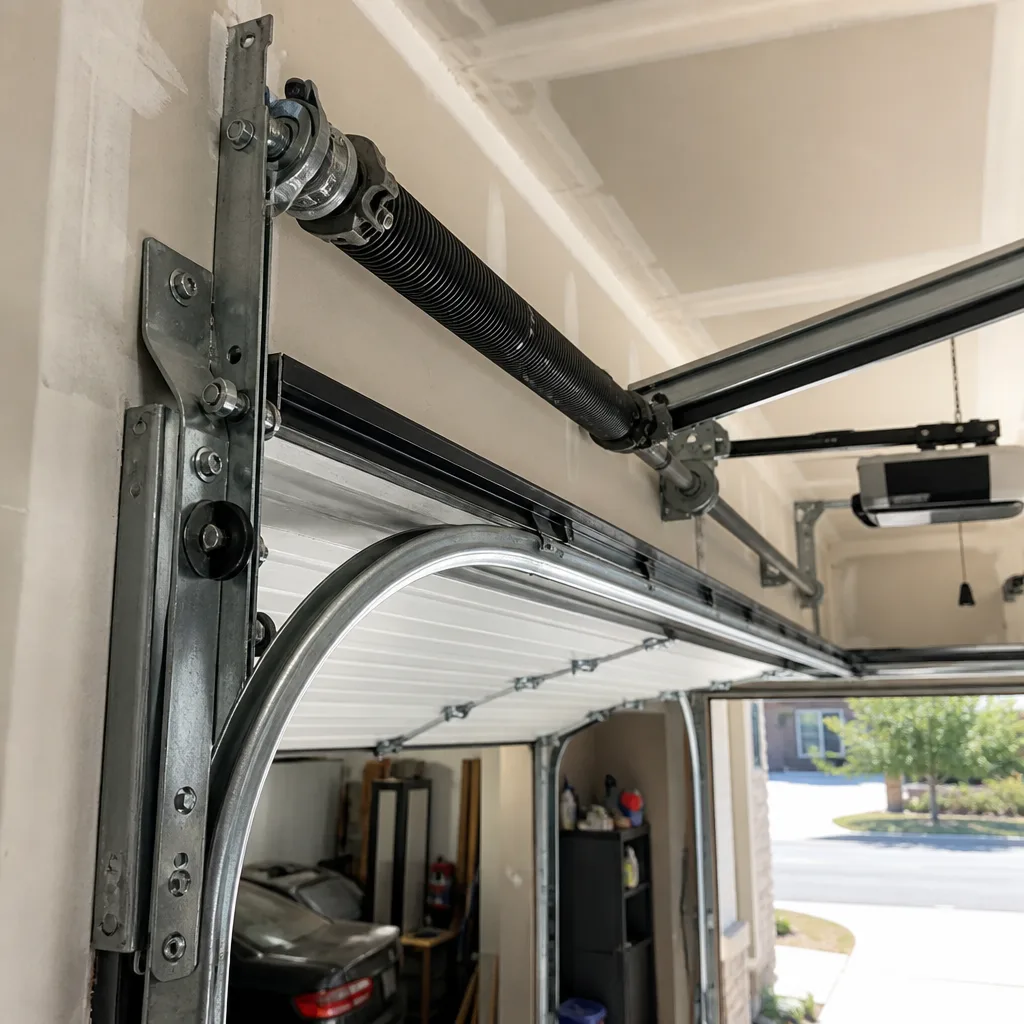
This is where we stop being polite about risk. Torsion springs, the coiled steel above your door, carry the full weight of the door, typically 150 to 250 pounds, in twisted potential energy. When a winding bar slips or a spring breaks during adjustment, that energy releases instantly. We have seen broken wrists, facial injuries, and worse from homeowners who followed online tutorials to the letter.
Extension springs, the stretched coils running parallel to the horizontal tracks on older Boerne homes, are equally dangerous when they snap. The safety cable running through them is there because springs have killed people.
Why These Jobs Belong to Professionals
- Torsion spring repair or replacement. Requires calibrated winding bars inserted into a winding cone under load. The specific turns needed vary by door weight, drum size, and spring inner diameter. A mistake of half a turn can send a bar flying.
- Lift cable replacement. Cables run under tension from the spring system to the bottom brackets. Releasing tension improperly drops the door or whips the cable.
- Bottom bracket adjustment or replacement. These brackets connect the cable to the door and are under constant spring tension. Manufacturers explicitly warn against homeowner service.
- Header bracket reinstallation. The bracket securing the opener to the wall above the door must anchor into solid framing, typically a doubled 2×12 or engineered header. A bracket pulling loose drops the opener assembly and potentially the door.
- Spring-assisted one-piece or swing-up door repair. Older homes in historic Boerne neighborhoods sometimes have these. The spring mechanisms are less standardized and equally hazardous.
Every spring we install at Mainspring Garage Door Co. home carries a warning label from the manufacturer. We did not put it there. The people who engineered the spring did, because they have tested what happens when it goes wrong.
The True Cost of DIY: Tools, Time, and Hidden Expenses
The internet makes DIY look cheap. A panel replacement video shows a homeowner swapping a dented section in twenty minutes. What it does not show is the $180 set of specialized vise grips, the $90 winding bar set, the $45 cable puller, and the trip to San Antonio for parts because the local box store stocks only two door sizes.
Real DIY Cost Breakdown: Panel Replacement Example
| Item | DIY Cost | Professional Cost |
|---|---|---|
| Replacement panel (Clopay or Amarr compatible) | $180-$340 | Included in quote |
| Shipping (oversized freight) | $65-$120 | Not applicable |
| Specialty tools (vise grips, winding bars, cable puller) | $280-$420 | Not applicable |
| Time: research, ordering, scheduling, execution | 6-10 hours | 1-2 hours on-site |
| Risk: incorrect panel match, improper installation, injury | Potentially significant | Insured, guaranteed |
| Warranty on work | None | 90-Day Done Right Promise |
The math shifts further against DIY for opener installation. A proper install requires routing low-voltage wiring, setting force limits with a force gauge, and programming travel limits so the door seals without over-traveling. The $25 multimeter from the hardware store will not measure opener force accurately. We have been called to Boerne homes where a self-installed opener pulled the door apart because the down-force was set too high, or where the safety reverse failed because the installer skipped the test.
Our standing offer is a Garage Door Installation in Boerne with upfront pricing stated before any work begins. That price includes the tools we already own, the parts on our truck, and the guarantee that if it is not right, we come back at no charge.
Boerne Permits, Inspections, and Code Requirements
Boerne enforces the International Residential Code with local amendments, and garage door installations fall under permitted work when they involve structural modification, electrical service to a new opener, or replacement of an existing door in a conditioned or finished space. The Hill Country Underground Water District and local aquifer protection rules also affect any work that disturbs slab or foundation edges in certain zones.
What Boerne Homeowners Need to Know
- Permit requirements apply equally to DIY and contractor work. The city does not waive inspection because you did the job yourself. If a permit is required for the scope of work, you pull it, schedule inspection, and correct any failures.
- DIY inspections follow the same standard. The inspector checks header size, jack stud placement, fire separation between garage and living space (if applicable), and proper egress. In Boerne’s older neighborhoods like Old Town or River Road, existing framing often does not meet current code. A contractor knows this and addresses it before inspection. A homeowner discovers it when the inspector fails the job.
- Opener electrical requires a licensed electrician or homeowner electrical permit. Texas allows homeowners to perform electrical work on their own residence with proper permitting, but the work must meet NEC standards and pass inspection. Most homeowners do not own a torque screwdriver calibrated for terminal screws or know the AFCI requirements for garage circuits added after 2017.
- Wind load ratings matter in Kendall County. The IRC specifies garage door wind load requirements based on exposure and structure height. A door rated for inland conditions may not pass in Boerne’s open Hill Country exposure. Professional suppliers verify ratings; box store inventory does not always match local requirements.
We handle permitting as standard on our installations. Carl Dutton has worked with Boerne building officials since 2016 and knows which inspectors prefer morning scheduling, which want the opener manual left on-site, and how to document wind load certification for a clean pass.
Homeowner’s Insurance and Liability Exposure
This is the point almost every DIY guide ignores, and it matters for Boerne homeowners who have spent decades building equity.
If a self-installed garage door component fails and injures someone, your homeowner’s insurance policy will scrutinize the installation. Most policies cover sudden and accidental damage, but they exclude damage arising from faulty workmanship by the insured. The adjuster will ask who installed the spring, whether the work met manufacturer specifications, and whether a qualified professional should have performed it. The “professional installation only” warning on the spring packaging becomes evidence in that conversation.
Worse, if the injury is to a third party, a delivery driver, a neighbor’s child, a visitor, you face potential personal liability beyond policy limits. A professional carries general liability and workers’ compensation insurance specifically for this exposure. Their policy responds first. Their errors and omissions coverage handles defects. You are not in the chain of liability.
We are insured and bonded, and our work is documented with photos, torque settings, and signed completion certificates. If there is ever a question, the paper trail points to us, not to you.
When DIY Is Actually the Right Call
We are not here to sell you service you do not need. There are times when doing it yourself is the correct decision, and we will say so plainly.
DIY Is the Right Call When:
- The task is purely cosmetic: painting, decorative hardware, window insert replacement.
- The task is routine maintenance: lubrication, weatherstripping, sensor cleaning, track debris removal.
- The opener issue is clearly electrical supply: tripped breaker, unplugged cord, or dead remote battery.
- You have verified the part is in stock locally, the tool is common, and no tensioned component is involved.
- You are willing to accept that a mistake means calling us anyway, and the cost of that mistake is within your tolerance.
In Fair Oaks Ranch and Cordillera Ranch, we have long-time customers who handle their own annual maintenance and call us only when a spring breaks or they want a new door. That is a square deal. They know what they can do, they know where the line sits, and they do not cross it. We respect that.
What Professional Service Actually Delivers
The difference between a professional garage door service and a handyman with a ladder is not price. It is what happens before, during, and after the work.
Before we arrive, a live person answers your call, 24/7, including nights, weekends, and holidays. No phone tree, no voicemail, no after-hours answering service. We schedule a window and keep it. Our technicians are background-checked, uniformed, and trained as journeymen under our K.E.Y.S. values code: Krafted right, Every time, Your home first, Standing behind it.
During the visit, we arrive with springs, cables, openers, and hardware on the truck. Most jobs are completed in a single visit because we do not have to order parts. We state the flat price before any work begins. If we discover additional issues, we stop and explain before proceeding. There are no surprises on the bill.
After the work, every job is covered by our 90-Day Done Right Promise: if it is not right, we make it right, stated in writing, with no dispute process. We have been in Boerne since 2016 and in business since 1984. We will be here when it matters.
Our standing offers include $50 off any repair over $250, a free second opinion on any written estimate, an $89 seasonal tune-up, and a permanent 5% discount for seniors and veterans. These do not disappear and reappear. They are always available because they reflect how we do business, not a marketing calendar.
We are factory-familiar with all major brands: LiftMaster, Chamberlain, Genie, Clopay, Amarr, Wayne Dalton, Craftsman, and Raynor. Whether you need Garage Door Repair in Boerne or a full replacement, we quote the work correctly the first time.
A Simple Decision Framework
After forty-two years in this trade, we have distilled the decision to four questions. Answer them honestly.
- Does the task involve a spring, cable, or bracket under tension? If yes, call a professional. No exceptions.
- Would a mistake cause injury to someone, or property damage I cannot afford? If yes, the risk premium exceeds any savings.
- Do I own the specialized tools, and will I use them again? If the tool cost exceeds half the professional quote, hire the professional.
- Is my time worth more than the savings? A ten-hour DIY panel replacement that saves $200 values your time at $20 per hour before tool costs. Most Boerne homeowners we serve value their time higher.
If you answer “no” to all four, proceed with confidence. If any answer is “yes,” the professional route is the sound choice.
Common Mistakes to Avoid
- Using the wrong spring. Springs are rated by wire gauge, inner diameter, and length. A spring that looks right but is wound for a lighter door will fail prematurely, often damaging the opener. We have replaced DIY springs in Boerne that lasted three months.
- Ignoring the manufacturer warning. The “professional installation only” label is not a suggestion to protect the manufacturer from lawsuit. It is there because people have been seriously injured doing exactly what the video shows.
- Skipping the safety reverse test after any opener work. Federal law requires every automatic garage door opener manufactured since 1993 to reverse when encountering resistance. A DIY install without proper force testing creates liability and endangers children and pets.
- Matching a new panel to an old door by eye. Panel profiles, gauge, and insulation vary by year and model. A close match from a box store often hangs wrong, stresses hinges, and voids remaining door warranty. We order factory-matched panels by serial number.
- Neglecting Boerne’s wind load requirements. A door that passed inspection in San Antonio may not meet Kendall County’s exposure rating. We verify this before quoting.
- Assuming homeowner’s insurance covers DIY installation errors. It typically does not. Read the workmanship exclusion in your policy.
- Calling the cheapest bid without verifying insurance and local presence. A truck with a magnet sign and no local address may not answer when the spring fails again. We have been at our Boerne location since 2016, and our phone is answered by a live person, always.
When to Call a Professional
Call when the door will not open, makes loud grinding noises, hangs crooked, reverses for no clear reason, or has visible damage to springs or cables. Call before attempting any work if you are unsure whether a component is under tension. Call if your opener is more than fifteen years old and showing intermittent failure, modern safety standards have changed significantly.
Mainspring Garage Door Co. offers free estimates in Boerne. Carl Dutton or one of our journeyman technicians will assess your door, explain what we find, and state the flat price before any work begins. Call (830) 365-0775.
Frequently Asked Questions
Professional torsion spring replacement in Boerne typically runs $180-$340 for a standard residential door, depending on spring size and whether one or both springs need replacement. The price includes the spring, winding bars, cable inspection, and safety testing. We state the exact price before starting work. Call (830) 365-0775 for a free estimate.
You can, but matching the profile, gauge, and color to your existing door is difficult without the original manufacturing specifications. Most homeowners find that freight shipping, tool purchase, and the risk of improper hanging make professional replacement more economical. We order factory-matched panels by door serial number and install them with proper hinge alignment.
Generally no, if the damage results from faulty workmanship by you, the insured. Most policies exclude losses arising from the insured’s own defective work. Damage from a professionally installed component failing despite proper installation would typically be covered. For liability if someone is injured by your DIY work, consult your specific policy.
Boerne requires a permit for garage door replacement when the work involves structural modification, electrical service to a new opener, or replacement in a conditioned or finished garage space. The permit and inspection requirements apply equally to DIY and contractor installations. We handle permitting as standard on our installation jobs.
Most repairs are completed in a single visit of one to two hours. We arrive with springs, cables, openers, and hardware on the truck. Same-day service is available for emergency situations like a door that will not close or a vehicle trapped inside.
Lubricate hinges, roller stems, and bearing plates with silicone spray quarterly. Clean photo-eye sensors monthly, Boerne’s dust and pollen coat them quickly. Inspect weatherstripping twice yearly and replace when cracked. Check balance by disconnecting the opener and lifting the door manually; it should stay at waist height. If it drops or rises, the spring tension needs professional adjustment.
The Bottom Line
The DIY versus professional question is not about pride or thrift. It is about matching the right skill and risk tolerance to the right task. Routine maintenance and simple adjustments belong to the homeowner. Any work involving stored mechanical energy, structural load, or electrical code belongs to a trained, insured professional with local accountability. In Boerne’s specific climate and regulatory environment, professional service often costs less than DIY when all factors are counted, and it carries a guarantee that no hardware store receipt can match. Know the line, respect it, and when in doubt, call someone who will still be in town to stand behind the work.
Written by Carl Dutton, Owner at Mainspring Garage Door Co., serving Boerne since 2016.